Learn to build real software with Claude Code. No coding background required.
In six weeks you ship one working internal tool for your company. Not a certificate. A tool that runs, that you built, that you can maintain after the program ends.
You're the person at your company who should be building this. You just don't know how yet.
Every Friday you rebuild the same spreadsheet. The report your VP asks for takes most of a day to assemble by hand. And five questions keep landing in your DMs because the answer lives in a doc nobody can find. You've described the fix to engineering twice. It never got prioritized.
"I know exactly what my team needs automated. I just can't build it."
"Our workflow is too specific for any off-the-shelf tool."
"I don't want to manage a consultant. I want to own the tool myself."
"Engineering agreed it was a good idea. It's been in the backlog a year."
"We pay forty thousand a year for software we use about 20% of."
"I want a skill that pays off at work, and maybe on the side too."
What's missing isn't an engineer. It's you, with the ability to build. You understand how the business actually works. That's the harder half.
A real tool for your real job.
Onboarding tracker
One place to see every client's status, owner, and next step. No more Friday copy-paste across three tabs.
Automated weekly report
Pulls from three systems, formats itself, lands in the inbox Monday morning. Built once, runs every week.
Campaign landing pages
Build and edit your own pages in an afternoon. No ticket, no developer queue, no waiting to change a headline.
Request intake queue
One form and one queue for requests arriving by Slack, email, and hallway. Everything triaged, nothing dropped.
Renewal risk board
Every account, its renewal date, and the signals that actually predict churn, in one view instead of four tabs and a hunch.
Quote and proposal builder
Fill five fields, get a formatted proposal. No more duplicating last quarter's deck and hoping you caught every number.
You ship something live in session one.
Fundamentals, and your first live site.
What Claude Code actually is, what GitHub and Vercel do, and how the pieces fit together. Then you build and deploy a simple one-page personal site before the session ends.
→ DELIVERABLE: A one-page personal site, live on the internet, that you built yourself.
Build a multi-page marketing site with a blog.
Homepage, about, contact, and a blog, all deployed together. Then you connect a Claude agent that publishes a new post every week — your first AI agent, running without you.
→ DELIVERABLE: A live multi-page site with an active blog and an agent writing new posts weekly.
Build a real app together.
The whole cohort builds the same project management tool: logins, user roles, and a drag-and-drop board. It’s the skeleton underneath most internal tools, and you keep the code.
→ DELIVERABLE: A working Kanban app with real authentication, running and deployed.
Pick your project and plan it.
The week that matters mostDecide what you’re building for your company, set up a Claude project to hold your context and prompts, and turn it into a PRD and milestone plan Claude Code can execute.
→ DELIVERABLE: A PRD, a milestone plan, and milestone one already running.
You’ll book your private 1:1 Scope Session after Week 1 and take it between Weeks 3 and 4, so you walk in with your problem already chosen and pressure-tested.
Build it.
Hands on keyboard with support. Real data, real edge cases, and the things that break for everyone the first time.
→ DELIVERABLE: A V1 you can put in front of a colleague.
Demo day, and what comes after.
Show what you built to the cohort. Then documentation, a maintenance plan, and the workflow for shipping your next feature without me.
→ DELIVERABLE: A working tool at your company, and the ability to keep improving it.
Flipped classroom. Short recorded modules before each session, so live time is spent building, never lecturing.
Everything in the program.
5 seats means we're picky. So should you be.
You know the tool your team needs. Nobody's building it.
You live in spreadsheets. You've never written code.
You can protect five hours a week for six weeks.
You want to own the tool, not hand it off.
You're an engineer who already ships software. You'd be bored.
You want a passive video course to watch on your own schedule.
Your company prohibits AI tools. Sort that out first.
You want a certificate more than a working tool.
The Shipped Tool Guarantee
Show up, do the work, and by demo day either a working tool you built is running at your company, or we keep working together until it is. Full refund through the end of Week 2.
What the first cohort built.
Reserved for a real build
Reserved for a real build
Reserved for a real build
Filling up after Cohort 1.
A tool that saves your team 5 hours a week pays for the program in the first month.
Most companies approve this the same way they approve a conference: one email. Here's the one to send.
See the one-page version for managers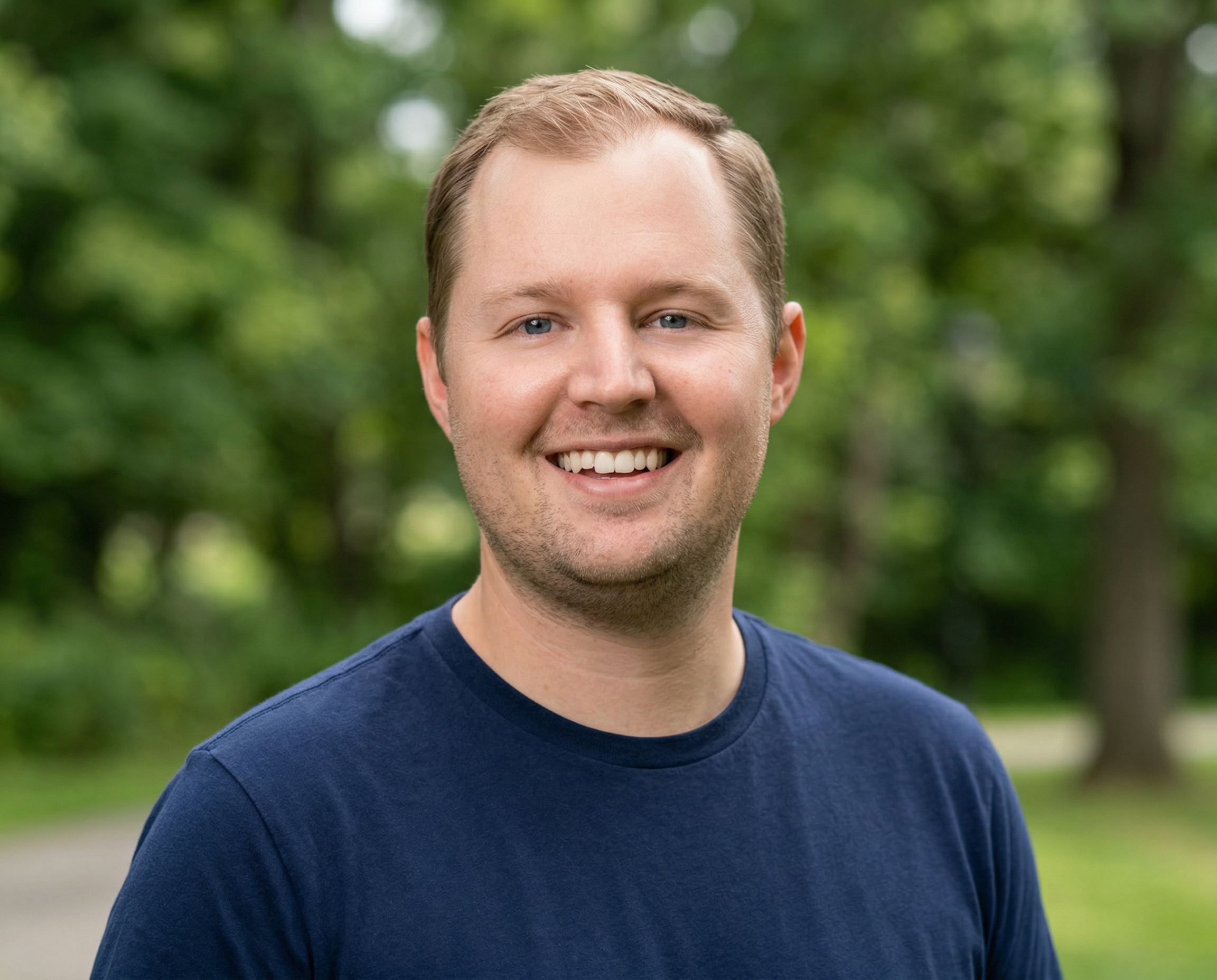
I teach in operator language, not engineer language.
Took two coding bootcamps as a student, so I know exactly what learning this from zero feels like.
Taught an iOS development bootcamp at City Colleges of Chicago, where my class outperformed every other cohort.
Spent the past several months building a complete SaaS platform end to end with Claude Code: payments, email, forms, client portal, coach portal, now shipping as a Mac desktop app.
A decade-plus in B2B SaaS across product, ops, customer success, and solutions engineering.
My job isn't to turn you into a developer. It's to make you the person on your team who ships.
Six live build sessions and the recorded modules
Two private 1:1s: Scope Session and Unblock Session
Weekly office hours through the whole program
Lifetime access to the Builders' Guild community
The Starter Kit from a real production build
The Shipped Tool Guarantee
The alternatives: a $12k-a-year subscription that almost fits, or a $15k consultant build that rots. This is $999, and you keep the builder.
Founding builders trade honest feedback and permission to share their build as a case study.
The price goes up with every cohort — $1,499 next, then $1,999.
Questions people actually ask.
One 2-hour live session a week, plus two to four hours of your own build time. Office hours and the 1:1s are there when you want them.
No. The program assumes you've never opened a terminal. If you're comfortable in spreadsheets and Notion, you have enough.
You get a short call to confirm fit and talk through the problem you'd build. If it's a match, you take one of the 5 seats.
A laptop and a Claude subscription, purchased separately from Anthropic. Everything else is covered in the Starter Kit.
Get that cleared before you apply. Some teams can build on non-production data or a personal machine, but that's a conversation to have internally first.
Every session is recorded and yours for life. Office hours are the place to catch up on anything you missed live.
That's what the Scope Session is for. Most people arrive with three ideas and leave with one worth building.
Six weeks from now, a tool you built is running at your company.
Built by you. Understood by you. Maintained by you.
Not this one? Leave an email and I'll tell you when the next cohort opens.
Form embed goes here